Gap where a tooth used to be? It’s not just a cosmetic thing — neighboring teeth start drifting into that space over time, your bite shifts, and chewing on that side gets awkward fast. Dental Bridge Treatment fixes this by literally bridging the gap, anchoring a replacement tooth to the teeth on either side of it.
What Is Dental Bridge Treatment?
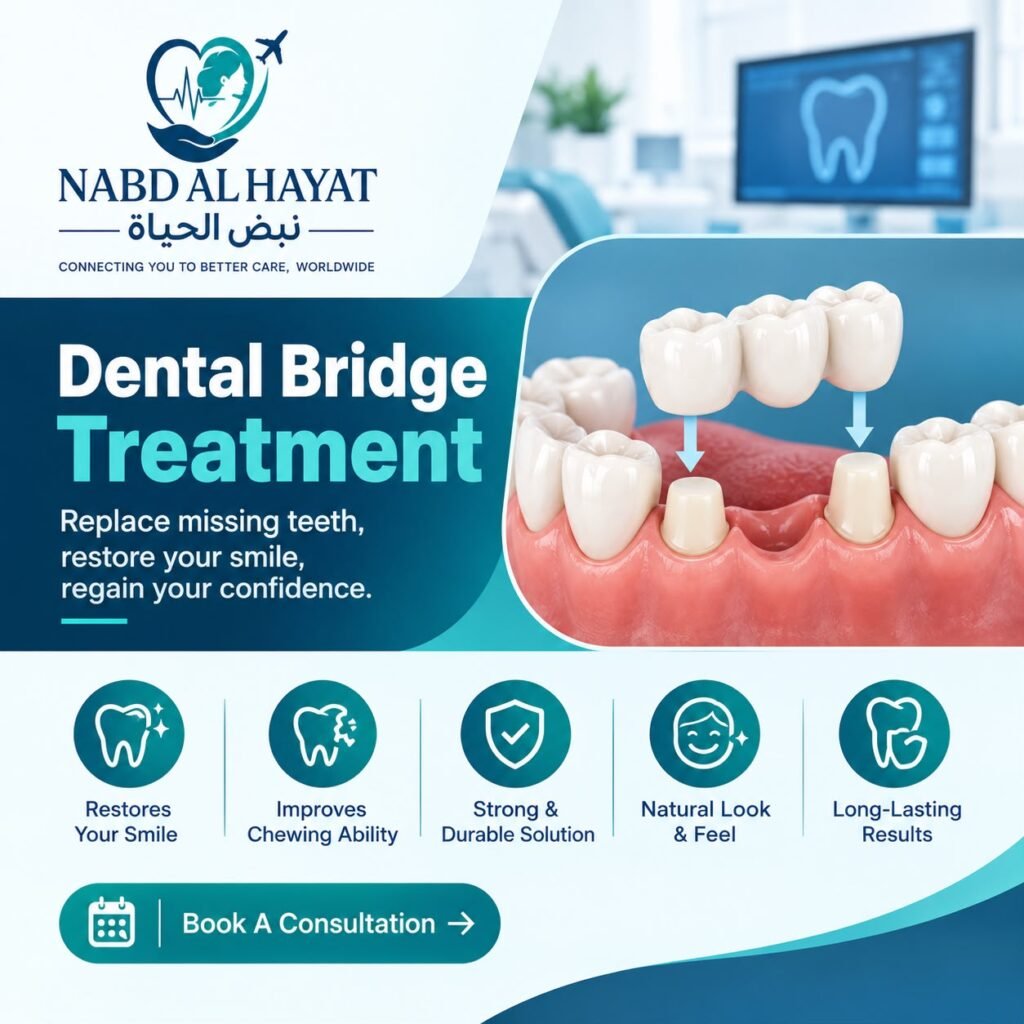
A dental bridge is a fixed appliance that fills the space left by one or more missing teeth. It’s held in place by crowns fitted onto the natural teeth (or implants) on either side of the gap, with the replacement tooth sitting in between, attached to both.
A few types get used depending on the situation:
- Traditional bridge (crowns on both sides)
- Cantilever bridge (supported by a tooth on just one side)
- Maryland bridge (held by a metal or porcelain framework instead of crowns)
- Implant-supported bridge (anchored on implants rather than natural teeth)
Which one works best depends on how many teeth are missing, the condition of the surrounding teeth, and whether there’s enough bone support. That gets figured out during the exam.
Who May Consider Dental Bridge Treatment?
No fixed scenario leads someone to this — Dental Bridge Treatment covers a range of situations. People often go for it when they want to:
- Fill a gap without going through implant surgery
- Restore normal chewing and speaking after tooth loss
- Prevent neighboring teeth from shifting into the empty space
- Keep the bite and facial shape from changing over time
- Get a fixed option instead of a removable denture
Healthy teeth on either side of the gap are usually needed to support a traditional bridge, so that’s something the dentist checks first.
How Is the Treatment Performed?
The adjacent teeth are filed down slightly to make room for crowns. Impressions are taken and sent off to create the custom bridge, and a temporary one is placed while the permanent piece is being made. Once ready, the final bridge is checked for fit and bite, then cemented into place. For implant-supported bridges, the process includes implant placement first, followed by a healing period before the bridge goes on. Most Dental Bridge Treatment cases wrap up over two visits, spaced a couple of weeks apart.
Recovery After Dental Bridge Treatment
There’s barely any downtime. Some sensitivity around the filed-down teeth and mild gum tenderness is normal for a few days. Patients are usually told to:
- Avoid sticky or hard foods right after the fitting
- Keep up regular brushing and flossing, including under the bridge
- Skip using the area for hard chewing until it settles
- Report any looseness or discomfort promptly
- Go for follow-up checks as advised
Most people are back to normal eating within a couple of days.
Results and Possible Risks
A properly fitted bridge restores chewing function and blends in naturally with the rest of the smile. With decent care, bridges usually last 10 to 15 years. Risks are rare but can include decay under the crowns, gum irritation, or the bridge loosening over time — mostly avoidable with good oral hygiene and regular checkups.
Dental Bridge Treatment in India
India has experienced dentists offering Dental Bridge Treatment with material options suited to different budgets. A proper evaluation upfront helps decide the right type of bridge for your case, your bite, and your long-term dental goals.